


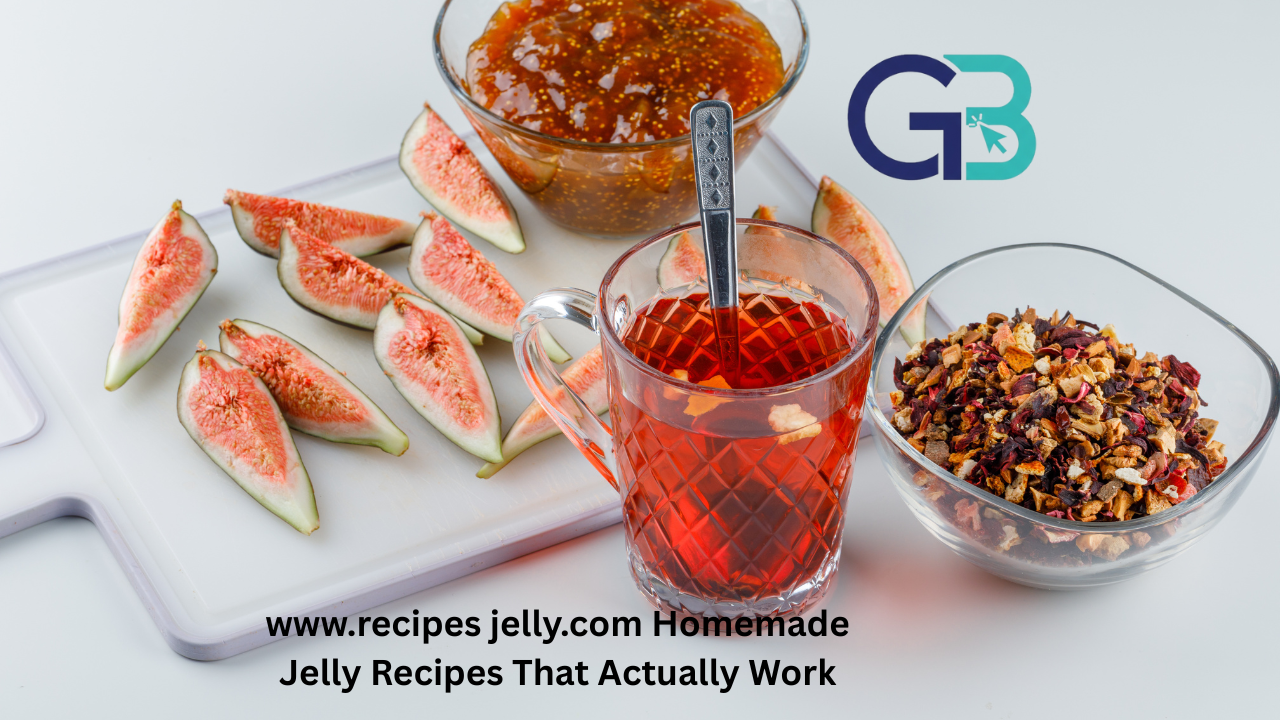
If you have ever stood in your kitchen watching fruit slowly melt into something glossy and fragrant, you already know there is something special about homemade jelly. This article is written in the same spirit. www.recipes jelly.com is not just a keyword here; it represents a practical, home-friendly way of making jelly that feels achievable, even if you have never tried it before.
Years ago, I watched my grandmother make jelly on a quiet Sunday afternoon. No fancy tools. No rush. Just fruit, sugar, and patience. That memory is why homemade jelly still matters. It is slower than store-bought, but it is also richer, cleaner, and far more satisfying. This guide walks you through that experience step by step, in plain language, so you can succeed the first time.
Throughout this article, you will see important terms and phrases in bold to help you understand what matters most. Everything is written to be practical, realistic, and easy to follow.
recipesjelly.com www.recipes jelly.com The Real Meaning of Homemade Jelly
Homemade jelly is often confused with jam or preserves, but there is a clear difference. That means the final result is clear, smooth, and spreadable. When people search for recipesjelly.com www.recipes jelly.com, they are usually looking for dependable methods that do not rely on guesswork.
At its core, jelly depends on four things working together. These are fruit juice, sugar, acid, and pectin. When heated correctly, these elements bond and form the familiar gel texture. If one part is missing or rushed, the jelly will not set. That is why patience and timing matter more than fancy ingredients.
Homemade jelly also gives you control. You choose the fruit quality, the sweetness level, and whether you use commercial pectin or natural pectin from the fruit itself. This control is what separates a good jelly from a forgettable one.
www.recipes jelly.com Understanding Ingredients Before You Start
Before turning on the stove, it helps to understand what each ingredient actually does. This knowledge alone prevents most beginner mistakes.
Fruit juice provides flavor and natural pectin. Fruits like apples, citrus, and currants are naturally high in pectin, while strawberries and peaches are lower. Sugar is not just for sweetness. It plays a key role in preservation and texture. Without enough sugar, jelly will taste flat and may not set properly.
Acid, usually from lemon juice, balances sweetness and activates pectin. Even sweet fruits benefit from added acid. Pectin is the setting agent, and it can be natural or store-bought. Beginners often prefer commercial pectin because it produces more consistent results.
When people rely on www.recipes jelly.com, they are usually trying to avoid failed batches. Understanding ingredients is the first safeguard.
recipesjelly.com www.recipes jelly.com Preparing Fruit the Right Way
Fruit preparation is where many people rush, and rushing shows in the final product. Fresh fruit should be ripe but not overripe. Overripe fruit smells good but often lacks enough pectin to set properly.
Wash the fruit thoroughly and remove stems, pits, or bruised spots. Then the fruit is gently cooked with water until it releases its juice. At this stage, the goal is extraction, not sweetness. Sugar comes later.
Once softened, the fruit is strained through a jelly bag or fine cloth. Gravity does the work. Pressing the fruit may cloud the juice, which affects the final clarity. Clear juice equals clear jelly. This small detail is why many recipesjelly.com www.recipes jelly.com methods emphasize patience at this step.
www.recipes jelly.com The Cooking Process Explained Simply
Cooking jelly is where chemistry becomes visible. The juice is combined with sugar and pectin, then brought to a rolling boil. A rolling boil means the mixture continues boiling even when stirred. This stage activates pectin.
Timing matters. Underboiling leads to runny jelly. Overboiling breaks down pectin and creates a stiff or grainy texture. Most recipes call for a specific time, usually one to two minutes of hard boiling after sugar is added.
Anecdotally, many first-time jelly makers remember the moment the liquid suddenly thickens. It feels like magic, but it is just chemistry working properly. www.recipes jelly.com recipes are designed to help you recognize that moment without panic.
recipesjelly.com www.recipes jelly.com How to Test Jelly Set Without Guessing
Testing the set is one of the most stressful parts for beginners, but it does not have to be. There are simple methods that work reliably.
One common method is the cold plate test. A small plate is placed in the freezer before cooking. A spoonful of hot jelly is dropped onto the cold plate. If it wrinkles when pushed with a finger, it is ready. Another method is the spoon test, where jelly drips off a spoon in sheets instead of droplets.
These techniques are often highlighted in recipesjelly.com www.recipes jelly.com guides because they remove uncertainty. Once you recognize the signs, you will trust your instincts more.
www.recipes jelly.com Safe Jarring and Storage Methods
Proper jarring ensures your jelly lasts months, not days. Clean jars are essential. They are usually sterilized in hot water before filling. The jelly must be poured while hot to create a vacuum seal as it cools.
After filling, jars are sealed and sometimes processed in a boiling water bath for added safety. This step is especially important if you plan to store jelly outside the refrigerator.
Many people remember the popping sound of cooling lids as proof of success. That sound never gets old. www.recipes jelly.com emphasizes safety because no recipe is worth spoiled food.
recipesjelly.com www.recipes jelly.com Common Mistakes and How to Fix Them
Even experienced cooks encounter problems. Jelly that does not set is the most common issue. This usually happens due to insufficient pectin, undercooking, or incorrect sugar ratios. In many cases, jelly can be reboiled and corrected.
Cloudy jelly is often caused by pressing fruit during straining or using overripe fruit. While it may not look perfect, it is still safe and tasty. Overly stiff jelly usually comes from too much pectin or excessive boiling.
Understanding these issues helps you troubleshoot calmly. That confidence is why people return to recipesjelly.com www.recipes jelly.com style guidance.
www.recipes jelly.com Flavor Variations That Feel Homemade
Once you master the basics, creativity becomes natural. Adding herbs like mint or rosemary can create subtle flavor twists. Citrus zest adds brightness. Mixing juices, such as apple and berry, balances sweetness and acidity.
These variations work best when added thoughtfully. Too many additions can overpower the fruit. Homemade jelly shines when flavors remain clean and recognizable.
Many experienced cooks remember the first time they experimented successfully. That moment transforms jelly making from a task into a hobby.
recipesjelly.com www.recipes jelly.com Why Homemade Jelly Is Still Worth the Time
In a world of convenience foods, making jelly may seem unnecessary. However, homemade jelly connects you to your food in a meaningful way. You taste the seasons. You create something that feels personal.
A jar of homemade jelly also makes a thoughtful gift. It carries effort, not just expense. When someone opens that jar, they experience your time and care.
This is why www.recipes jelly.com continues to matter. It represents knowledge passed down, refined, and shared in a modern way.
www.recipes jelly.com Final Thoughts on Getting Started
Making jelly is not about perfection. It is about learning, adjusting, and enjoying the process. Your first batch may not look like a magazine photo, but it will taste real. With each attempt, confidence grows.
If you approach the process calmly and follow trusted methods like those found through recipesjelly.com www.recipes jelly.com, success becomes repeatable. Over time, jelly making stops feeling technical and starts feeling natural.
The next time fruit is in season, take the opportunity. Turn it into something that lasts. Homemade jelly is more than food. It is a small tradition you can keep alive in your own kitchen.
